Community Council of the Black community of the lower Calima River basin
Territory, identity and life we build together
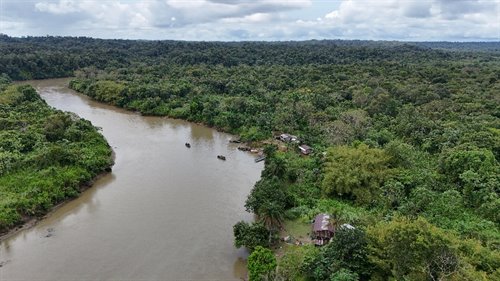
We are a community that sees much more than a geographic space in its territory: Calima is our home, our memory, our culture and the legacy we want to preserve for the generations to come.
We work to defend our collective rights, strengthen the community and protect the ecosystems that sustain our life. We bring together participation, governance, conservation and sustainable alternatives to protect this ancestral territory.
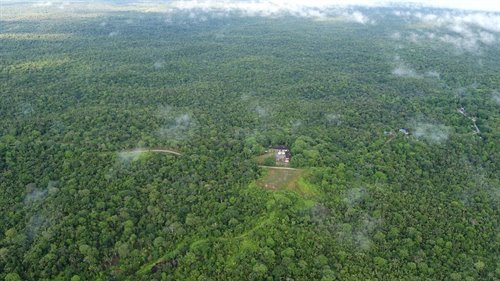
We are a territory where the natural wealth of the Pacific, the ethnic and cultural diversity of our Afro-descendant communities and the social dynamics that guide our collective life come together and depend on one another. In Bajo Calima the territory is not just geography: it is a living system sustained by ancestral knowledge, traditional practices and a harmonious relationship with nature.
From this understanding, the actions and processes carried out in the community aim to strengthen cultural identity, protect ecosystems and respond in a participatory way to the needs and hopes of its people, promoting sustainable development with an ethnic and territorial approach.
Law 70 of 1993 and Decree 1745
Recognition and titling of the Lands of Black Communities.
Established on 15 September 1998
Supported by the Black Communities Process (PCN) and ONCAPROTECA.
Collective title · Resolution 002244 of 2002
66,724 hectares titled over an ancestral territory of approx. 130,000 ha.
From the movement to return home to the collective title over 66,724 hectares. Three decades of self-government written by the communities of the Calima River.
Community initiatives and actions that strengthen self-government, the conservation of our native species and the well-being of families in the territory.
Forest Conservation01
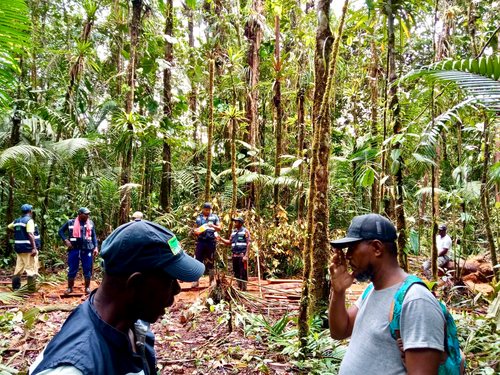
The chanul and chachajo route
A strategy to rescue, monitor and protect two emblematic timber species of the Pacific rainforest, preserving our ancestral forest heritage.
Protected species in the territory
Biocultural Restoration02
A community REDD+ tree nursery
Our own space to germinate and grow native forest and fruit seedlings, supplying the days of enrichment and restoration of the collective forest.
Native seedlings germinating
Local Economy03
Sugarcane growers' collective
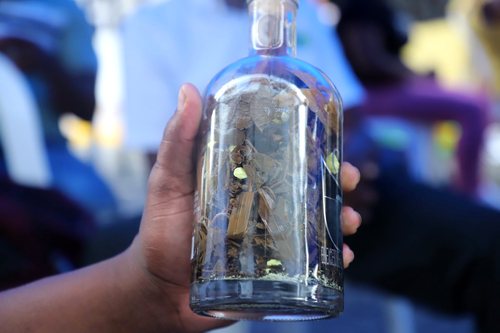
Producer families organising to improve the agroecological growing of sugarcane and safeguard the tradition of distilling viche as cultural and economic heritage.
Panela and viche tradition
Territorial Governance04
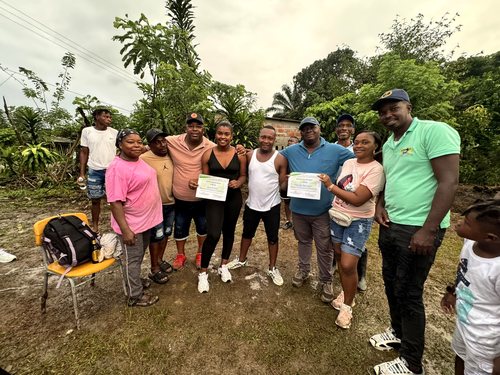
Population census
Demographic, social and productive surveys in the nine communities of Bajo Calima to underpin the ethno-development plan and institutional management.
9 communities surveyed
Return and Infrastructure05
Homes and schools in Trojita and Nueva Esperanza
New housing units handed over and school buildings upgraded in the river communities, ensuring decent conditions for returning families to put down roots again.
La Trojita and Nueva Esperanza
The nine communities
The territory, community by community
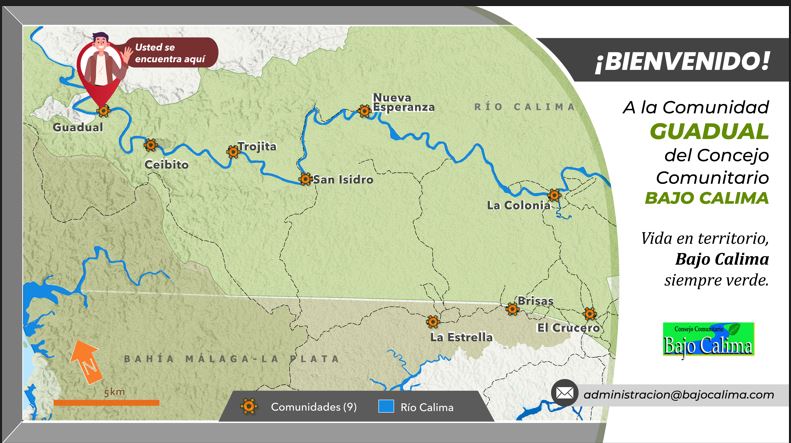
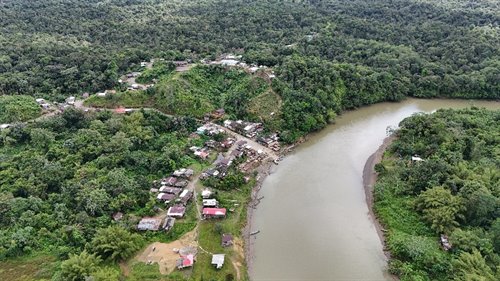
Five communities live on the river and four along the road. Tap each one on the diagram to discover it.
Five river communities. Reached by boat along the Calima: the river is the road for people, food and harvests.
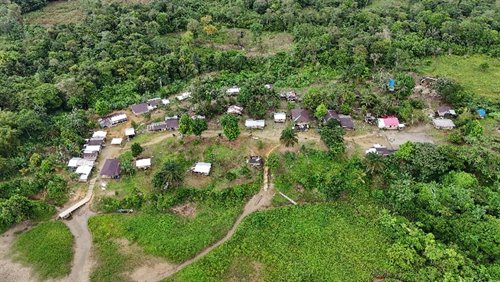
Four road communities. Reached by the dirt track that leaves the Alejandro Cabal Pombo road at El Gallinero, kilometre 16.
River community
Guadual
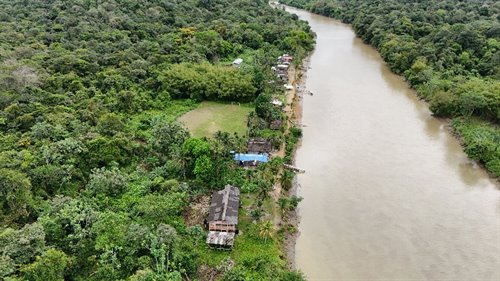
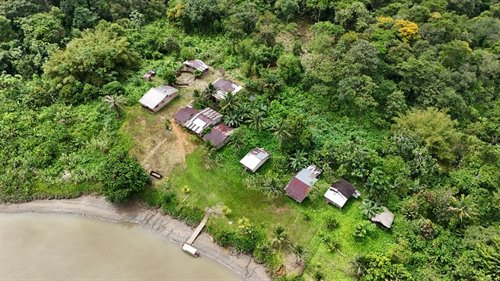
Riverside community on the banks of the Calima River, with a school.
Sixty-six thousand seven hundred and twenty-four hectares collectively titled in 2002. They cannot be sold, lost over time or seized. Here we live, here we decide and here we will stay.
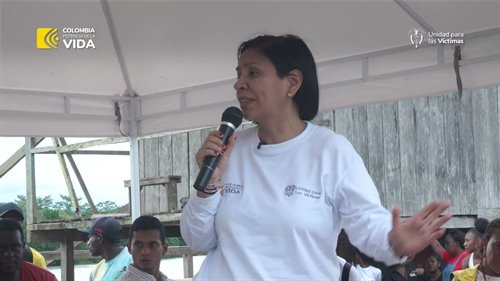
General Assembly of the Bajo Calima Community Council
Newsroom & Current Affairs
News from the Territory
Official information, community progress, video records and ongoing projects of the Community Council of the Lower Calima River Basin.
Video
Returning to the river communities
More than 700 people returned to Bajo Calima after three years of forced displacement, reaffirming their ancestral roots.